The Fragmentation Problem
Building an accessory dwelling unit involves coordinating dozens of vendors across an 80-step process that typically spans 6-12 months. The construction industry still runs on spreadsheets, emails, and phone calls, making it nearly impossible to maintain a single source of truth. Project managers spend more time tracking down information than managing actual work. Customers have no visibility into progress. Vendors operate in silos. I built the Abodu Platform to solve this—a single system that connected all stakeholders and became the operational backbone of the company.
The Platform
The platform managed the entire lifecycle of each project, from initial deposit to key handover. Project managers used it to orchestrate construction workflows, track financials, and communicate with customers. Vendors used it to bid on projects, submit change orders, and get paid. Customers used it to make payments, track milestones, and communicate with their project team. Built on React and Nest.js with Postgres, the system integrated Stripe for payments, Twilio for notifications, and Sendgrid for communications. It processed over $90M in customer payments and supported the company growth to $30M in annual revenue across 90 cities.
PM Dashboard
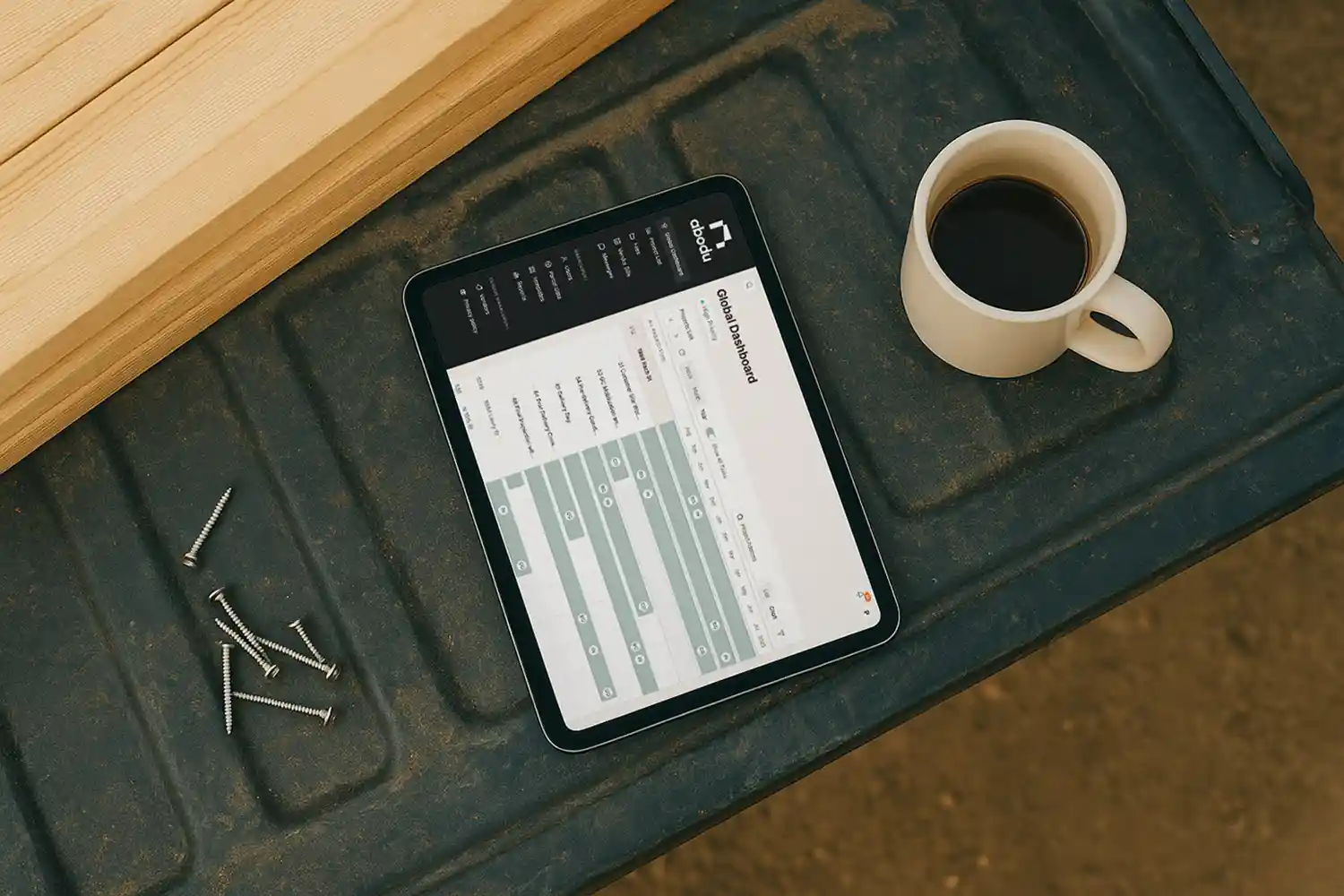
Project managers were juggling multiple high-value projects simultaneously, each with its own timeline, budget, and risk profile. The dashboard gave them a real-time view of their entire portfolio, surfacing critical tasks, overdue items, and financial health at a glance. This replaced hours of manual status reporting and allowed PMs to focus on the projects that needed attention most.
Construction Management
The 80-step construction process was templated into standardized workflows, ensuring consistency across all projects. Each task could be tracked granularly—from "Collect COI from Crane Partner" to "Install Finish Flooring"—with clear sequencing visualized as either a list or Gantt chart. This standardization increased on-time delivery by 70% and made it easy to onboard new project managers.
Billing & Payments
The manual billing process was slow and error-prone. Project managers had to notify finance to generate invoices, customers mailed checks, and payment reconciliation was entirely manual. The platform automated this: when a PM marked a milestone complete, the system automatically generated and sent an invoice. Customers could pay instantly via Stripe, and the payment was automatically reconciled. This cut the average payment cycle from 14 days to 6 days.
Unified Communications
Critical conversations were happening across text, email, and phone calls, creating no single source of truth and frequent disputes. The platform centralized all project communication in one place. Customers could message their project team directly, and the system allowed for hidden internal threads within the same conversation—so a PM could coordinate with vendors or internal teams without the customer seeing those messages. Users could reply via email, which threaded back into the platform, driving 90% adoption and virtually eliminating the "paper trail" problem.
Operational Maturity
The Abodu Platform transformed the company from a scrappy startup into a disciplined operator. By automating the manual overhead of status reporting and billing, we doubled the project capacity of each Project Manager, creating the margins necessary for sustainable growth.